The short answer
- Poor sleep, including sleep apnea, can cause trouble focusing, hyperactivity, and mood swings that overlap with ADHD.
- A child can also have both ADHD and a sleep problem, so one doesn't rule out the other.
- If your child snores most nights or breathes through the mouth, ask your pediatrician about checking their sleep.
Your child can't sit still, forgets instructions, and melts down over small things. ADHD may be the first thing that comes to mind. Sometimes that's the right answer. But poor sleep, including sleep apnea, can cause many of the same signs, and it's easy to miss.
This guide explains how ADHD and sleep apnea can overlap, why a tired child may look hyper instead of sleepy, and what to ask your pediatrician. It isn't meant to replace an ADHD evaluation. ADHD is a real condition with its own care. The goal is to make sure sleep is part of the conversation. Every child is different, so take this as a starting point.
How are ADHD and sleep apnea linked?

Research shows a real link between sleep-disordered breathing and ADHD symptoms in children. Sleep-disordered breathing covers a range of problems, from heavy snoring to obstructive sleep apnea (OSA). OSA means the airway narrows or closes again and again during sleep, which breaks up deep sleep. Because it happens at night, while the rest of the house is asleep, it's easy for parents to miss.
A 2014 review of 18 studies found a medium-sized link between sleep-disordered breathing and ADHD symptoms in kids. This doesn't mean sleep apnea causes ADHD, or that every child with ADHD has a sleep problem. It means the two often show up together, and doctors should look at both.
The American Academy of Pediatrics (AAP) lists ADHD and learning problems among the things doctors should ask about when a child snores. That's a clue that sleep and attention are closely tied.
Sleep apnea vs ADHD: shared signs

Sleep apnea vs ADHD can be hard to tell apart, because many daytime signs look alike. Both can show up as trouble paying attention, acting on impulse, and being very active. Both can affect mood and school work. That's why a quick look at sleep is worth it. Some kids with sleep apnea also seem sleepy, nodding off in the car or at school. Others never look tired at all.
The differences are often at night. Kids with sleep apnea may snore most nights, gasp or pause in their breathing, sleep restlessly, sweat a lot, or start wetting the bed again. They may also have morning headaches and a hard time waking up.
Only a doctor can sort out what's going on. If your child has daytime signs and night signs together, bring both up at the same visit. A short sleep log can help you remember the details.
- Shared: trouble focusing, impulsivity, hyperactivity
- Night signs: snoring, gasping, restless sleep
- Morning signs: headaches and hard wake-ups
Why poor sleep looks like ADHD

When adults don't sleep well, they usually feel slow and sleepy. Kids often react differently. A tired child may get wound up instead, with more energy, less patience, and a shorter fuse. That can look a lot like hyperactivity. Think of how you feel after a few bad nights in a row. Now picture a child who sleeps that way most nights, without knowing why.
Sleep apnea breaks sleep into pieces. The brain wakes briefly, many times a night, to restart normal breathing. Your child may sleep enough hours but still not get enough deep, steady sleep. Over time, that can affect focus, memory, mood, and self-control.
Mayo Clinic notes that some medical conditions, including sleep disorders, can cause symptoms much like ADHD. That's why doctors check for other causes as part of an ADHD evaluation.
Can a child have both?

Yes. A child can have ADHD and a sleep problem at the same time. Sleep trouble is common in kids with ADHD. One study shared by the American Academy of Sleep Medicine found that about 7 in 10 schoolchildren with ADHD had sleep problems. So finding a sleep problem doesn't mean the ADHD diagnosis is wrong.
Some parents search for "sleep apnea misdiagnosed as ADHD." It's a fair worry, but it's not the full picture. The better question is whether sleep has been checked as part of your child's care. Your pediatrician can help sort out which signs come from where. Either way, checking both gives your child the best chance to feel and do their best.
Never stop or change ADHD medicine on your own. Talk with your child's doctor first, even if you think sleep may be part of the problem.
ADHD and mouth breathing: what to know

Mouth breathing doesn't cause ADHD. But a child who breathes through the mouth day and night may have a blocked or narrow nasal airway. Mayo Clinic lists mouth breathing as a sign of possible sleep apnea in children. Mouth breathing on its own isn't a diagnosis, though. Many kids breathe through the mouth during a cold. What matters is when it happens most days and nights, for weeks at a time.
Common reasons for mouth breathing include large tonsils and adenoids, allergies, and a narrow upper jaw. A child who sleeps with the mouth open may snore, sleep restlessly, and wake up tired. That can lead to daytime focus and mood problems.
If your child breathes through the mouth most of the time, mention it to your pediatrician and dentist. Learn more about how mouth breathing can affect the face and jaw as kids grow.
- Mouth open during sleep or play
- Snoring, dry lips, or a stuffy nose
- Dark circles or tired mornings
Questions to ask your pediatrician

Going in with a few clear questions can make the visit easier. Bring notes about your child's sleep, snoring, and daytime behavior. If a teacher has shared concerns, bring those, too.
Ask whether your child's sleep should be checked. For a child who snores and has other signs, the AAP advises an overnight study in a sleep lab. A doctor reads the results and explains them to you.
Ask whether your child should see an ENT, an ear, nose, and throat doctor, to look at the tonsils and adenoids. Ask, too, about allergies or a stuffy nose that won't clear, since these can make breathing at night harder. And ask how sleep care and ADHD care can work together, so nothing gets missed.
- Should my child have a sleep study?
- Could tonsils, adenoids, or allergies play a part?
- How do sleep care and ADHD care fit together?
Can treating sleep help attention?

For some children, treating a sleep problem may help with attention and behavior. In the 2014 review, 12 studies looked at ADHD symptoms before and after surgery to remove tonsils and adenoids. On average, symptoms improved in the months after surgery.
That's encouraging, but it isn't a promise. Treating sleep doesn't fix ADHD. Some kids improve a lot, some a little, and some not at all. A child who has ADHD will still need ADHD care, even if their sleep gets better.
Every child is different, so results vary. The best plan comes from your pediatrician and the rest of your child's care team, working together. If a sleep problem is found and treated, keep notes on how your child sleeps and acts in the weeks after. Share them with your pediatrician, so everyone can see what's changing.
Where an airway dentist can help
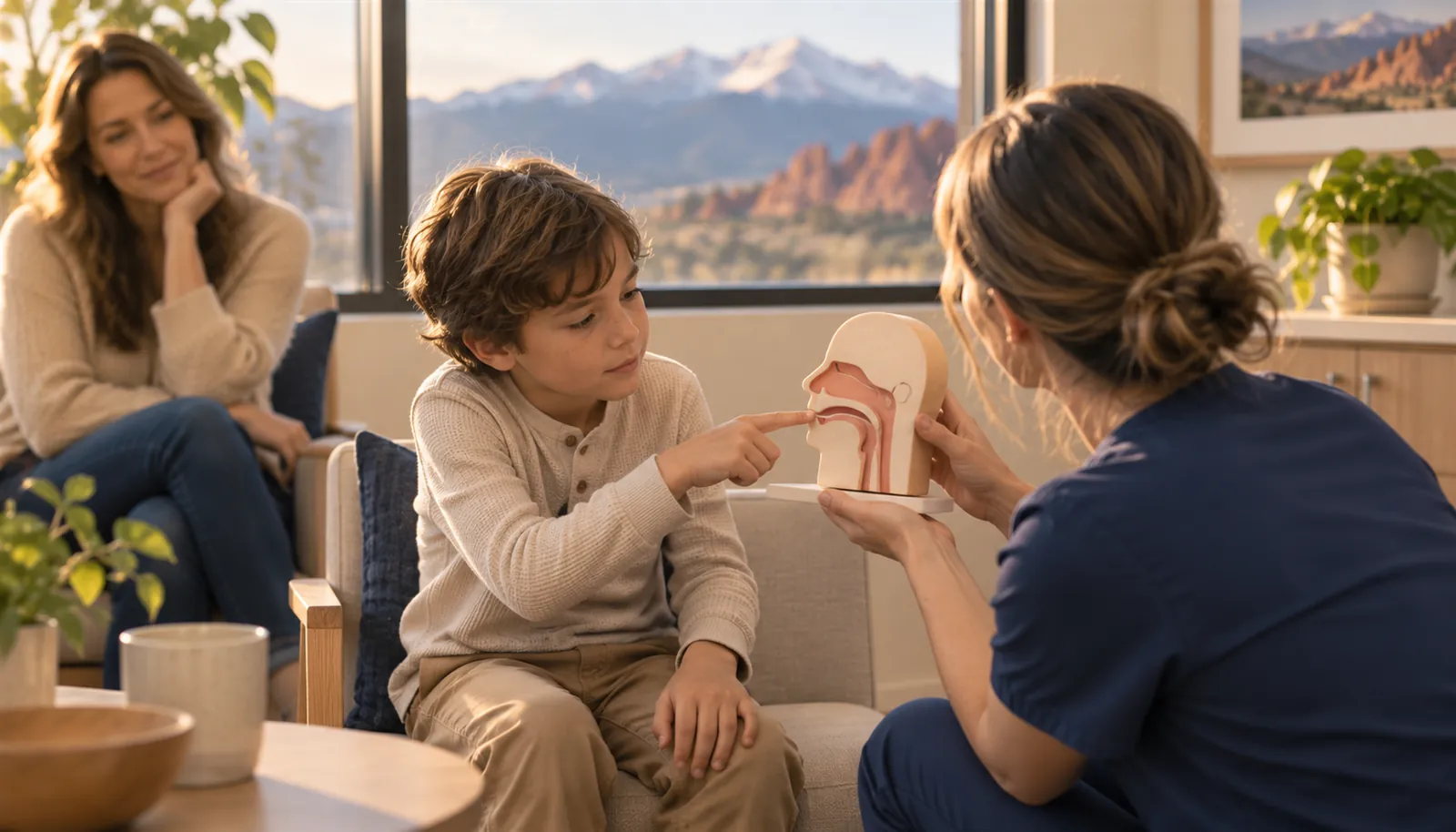
A dentist can't diagnose ADHD or sleep apnea. But a dentist trained in airway care may notice signs during a visit, like a narrow upper jaw, crowded teeth, or mouth breathing. We can share what we see with your pediatrician. At a visit, we look at how your child breathes, the shape of the upper jaw, and how the tongue rests. We explain each step in kid-friendly words, and parents are welcome in the room.
When a narrow jaw is part of the picture, care like upper and lower jaw expansion for kids may help make more room to breathe. Nasal breathing practice through myofunctional and breathing care may help, too. Learn more about sleep apnea in children.
Not sure where to start? Try our free airway and sleep quiz. If you live outside Colorado Springs, we help out-of-town patients plan their visits, too.

Qualified Dentist, American Academy of Dental Sleep Medicine. Top Vivos VIP Provider and The Breathe Institute Ambassador.
Sources
- Sedky K, Bennett DS, Carvalho KS. Attention deficit hyperactivity disorder and sleep disordered breathing in pediatric populations: a meta-analysis. Sleep Med Rev, 2014.
- Marcus CL, et al. Diagnosis and management of childhood obstructive sleep apnea syndrome. Pediatrics, 2012 (AAP clinical practice guideline).
- Mayo Clinic. Pediatric obstructive sleep apnea: symptoms and causes.
- Mayo Clinic. ADHD: diagnosis and treatment.
- American Academy of Sleep Medicine. Sleep problems are common in children with ADHD.
This article is general information, not medical advice. Every person is different. Talk with your doctor or book a consult about your own care.