The short answer
- Most TMJ problems improve with simple, conservative care, such as rest, soft foods, heat or ice, and gentle jaw exercises.
- Experts advise trying reversible treatments first and avoiding treatments that change your bite or joint for good.
- If pain lasts, a dentist trained in jaw pain can guide TMJ treatment that fits you.
If your jaw clicks, aches, or feels tired after chewing, you may be looking up TMJ treatment and finding a lot of mixed advice. The good news is that most jaw pain gets better with simple steps you can start at home.
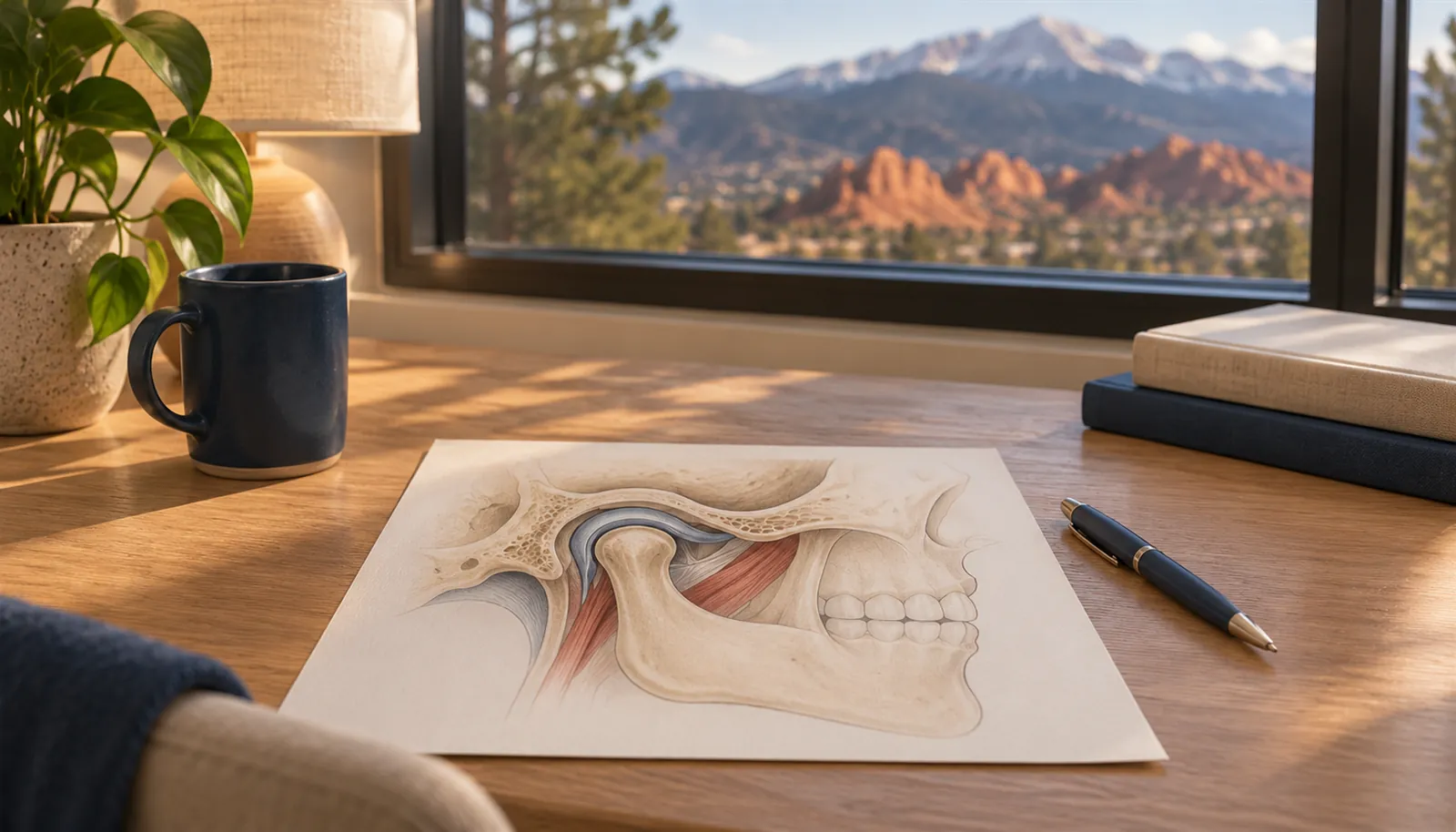
TMJ stands for the temporomandibular joint, the hinge just in front of each ear that connects your lower jaw to your skull. When people say "TMJ," they usually mean TMD, or temporomandibular disorders. This guide covers what works, what the research says, and when it makes sense to do more.
What is TMJ disorder?
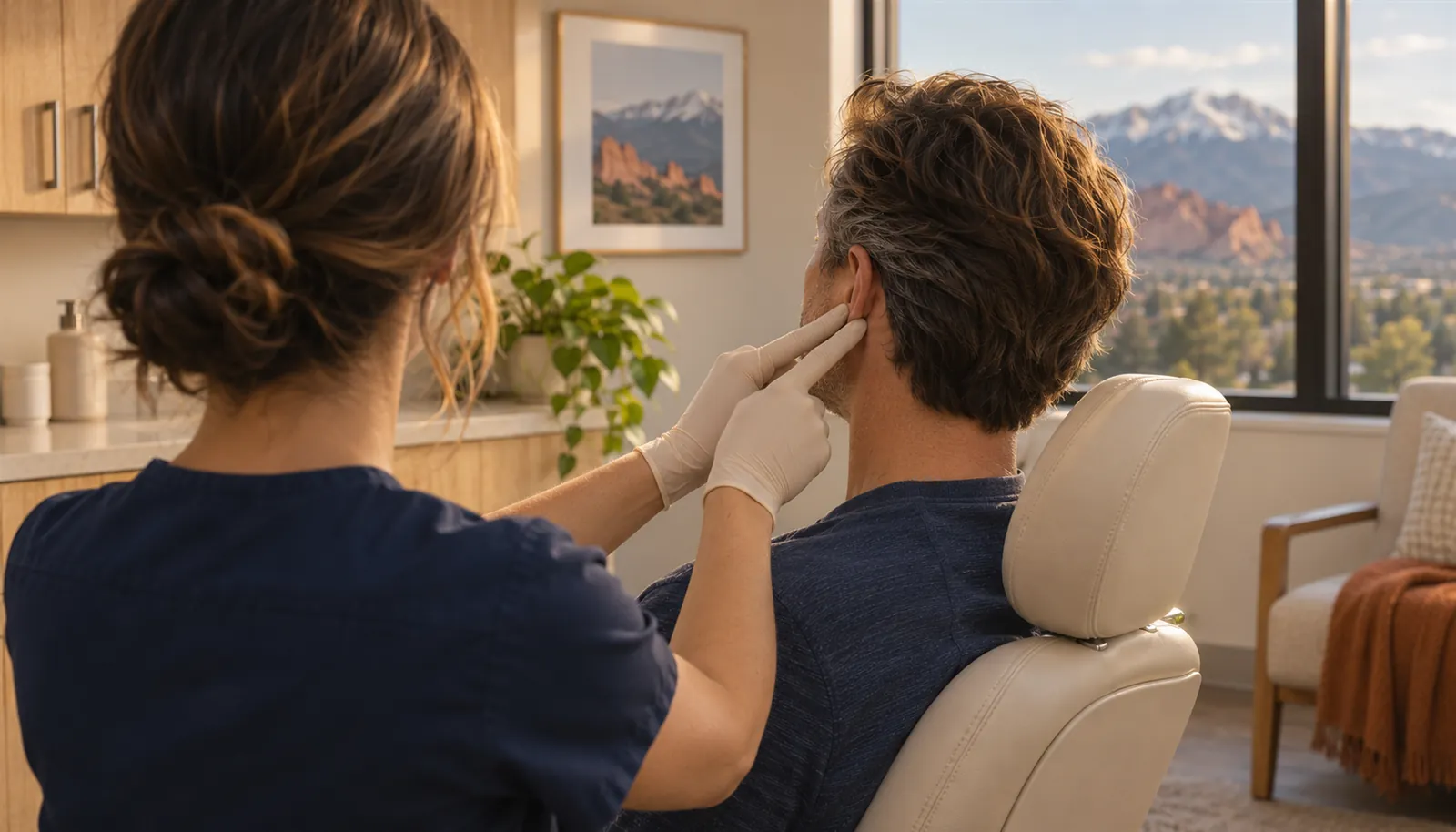
TMJ disorder, or TMD, is a group of conditions that cause pain or trouble in the jaw joints and the muscles that move your jaw. The National Institute of Dental and Craniofacial Research (NIDCR) says there are more than 30 of them. They affect about 5% of U.S. adults, and they are about twice as common in women.
Common signs include pain in the jaw, face, or around the ear, a tired jaw after chewing, limited opening, and headaches. Some people also feel pain that spreads into the neck.
Clicking alone is common, too. NIDCR notes that clicking or popping without pain is normal and usually does not need treatment. The cause of TMD is often a mix of things, such as muscle strain, joint changes, clenching habits, stress, and how the body handles pain.
Because TMD has many causes, there is no single fix that works for everyone. The best TMJ treatment for you depends on what is driving your pain, which is why a careful exam matters. See a doctor soon if your jaw locks open or closed, your bite suddenly changes, or pain comes with fever or swelling. Sudden jaw pain with chest pain or shortness of breath needs emergency care, so call 911.
- Pain in the jaw, face or near the ear
- Tired jaw, limited opening or locking
- Clicking alone is usually not a problem
Can TMJ go away for good?

For many people, yes. NIDCR says many TMD problems are short-lived and go away on their own. The American Academy of Orofacial Pain (AAOP) says most orofacial pain conditions respond well to conservative, non-surgical care. Some people have pain that comes and goes, or lasts longer, and they do best with a plan to manage flares.
That is why experts suggest starting with reversible care. Reversible means it does not change your teeth, bite, or joint in a way that can't be undone. NIDCR advises avoiding treatments that change the bite or joint for good unless simpler care has failed and the reason is clear.
Be careful of promises online. Every person is different, so results vary. A good plan looks at your habits, sleep, stress, and jaw together. Small steps, done every day, often add up to real relief over time.
How to fix TMJ at home

You can often ease TMJ pain at home by resting your jaw, using heat or ice, and easing clenching. NIDCR and Mayo Clinic suggest giving your jaw a rest with soft foods, cutting food into small bites, and skipping gum and chewy foods. Try not to open very wide, like big yawns or large sandwiches.
Heat or ice can help. Mayo Clinic suggests 15 to 20 minutes a few times a day. Ice tends to suit new, sharp pain. Moist heat tends to suit dull, lasting soreness. Over-the-counter pain relievers can also help for a short time. Ask your doctor or pharmacist what is safe for you.
Notice your habits, too. Many people clench during the day without knowing it. Check in a few times a day: lips together, teeth apart, jaw loose. Stop nail biting, chewing pens, and leaning on your chin.
Stress and poor sleep can make jaw pain worse. NIDCR lists relaxation skills, staying active, and approaches like cognitive behavioral therapy and biofeedback as helpful parts of care. Slow, deep breathing before bed may also help tense jaw muscles let go.
- Soft foods and small bites
- Heat or ice for 15 to 20 minutes
- Lips together, teeth apart
Do TMJ exercises and massage help?

Yes, for many people. Gentle TMJ exercises are one of the first treatments NIDCR and Mayo Clinic list. A physical therapist or your dentist can show you stretching and strengthening moves for your jaw, and help you open and close in a smooth, straight path.
TMJ massage can also help tight chewing muscles. Mayo Clinic notes that a physical therapist or other provider can teach you how to massage these muscles yourself. NIDCR lists physical therapy, including hands-on manual therapy, as a helpful option.
Start slowly. Exercises should feel like a gentle stretch, not sharp pain. If a move makes your pain worse, stop and ask for help. Done most days, simple routines often work better than one hard session. Many people pair exercises with heat first, which can help stiff muscles relax.
- Gentle stretching and strengthening
- Self-massage of the chewing muscles
- Stop any move that causes sharp pain
Can a chiropractor help with TMJ?
A chiropractor may help some people, but research on chiropractic care for TMD is limited. Research on chiropractic care for TMD is limited. The best support is for physical therapy, including hands-on care of the jaw and neck muscles, along with exercises and self-care.
If you want to try hands-on care, choose someone with real training in jaw problems. Ask how they will work with your dentist or doctor. Gentle treatment that eases pain and helps you move better is a good sign. Pain that gets worse is a reason to stop.
TMJ pain often travels with neck and shoulder tension, poor sleep, and stress. That is why care from more than one provider sometimes helps. Our article on TMJ headaches and neck pain explains how these areas connect.
Night guards, splints and medicines
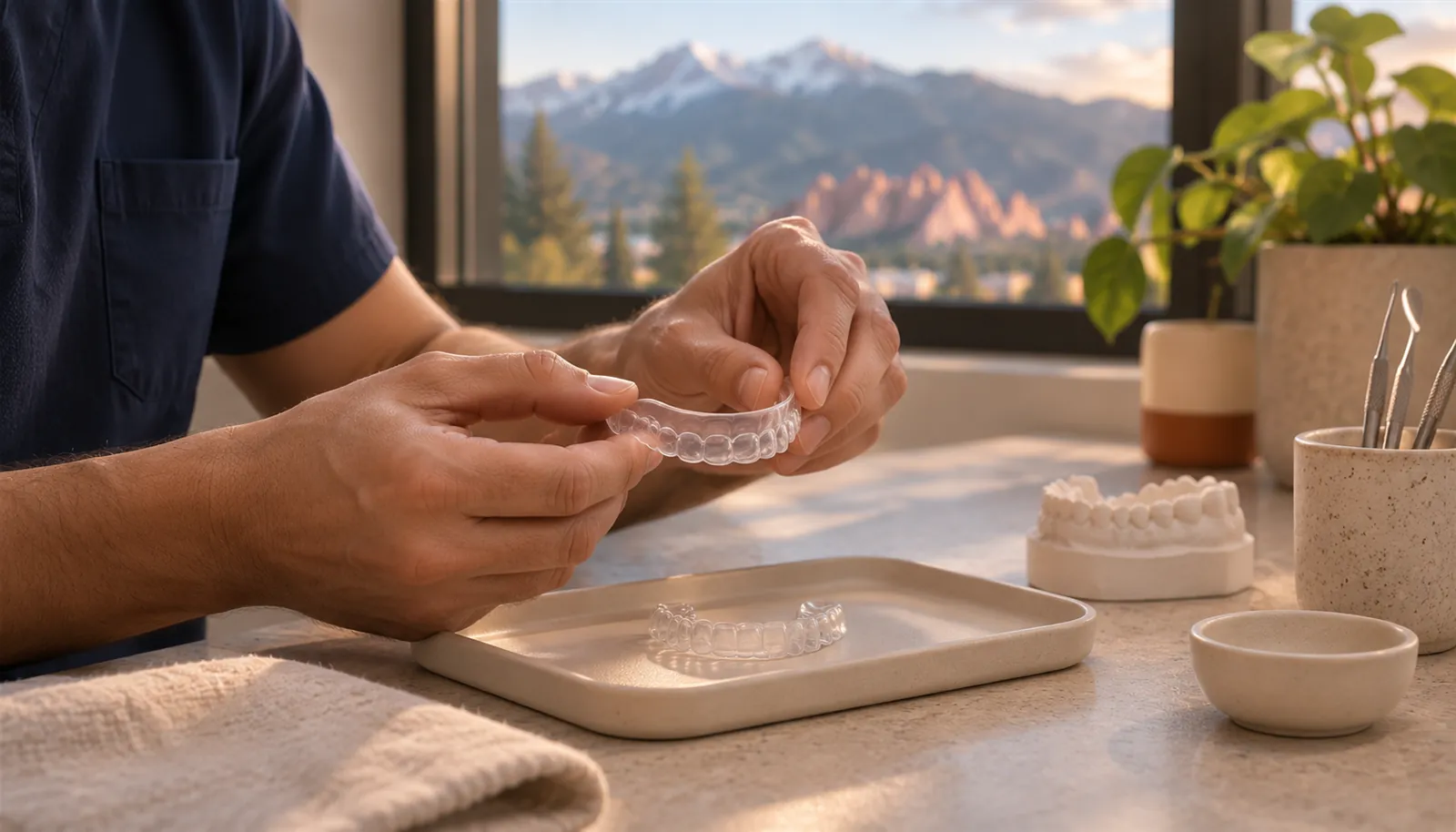
A custom night guard, also called an oral splint, is a thin device worn over the teeth, often at night. AAOP says custom oral appliances can help in specific cases. NIDCR adds that the evidence for pain relief is limited, and a splint should not change your bite for good.
Guards are often most useful when you clench or grind at night. They spread the force and protect your teeth. A guard made and adjusted by a dentist tends to fit and work better than a loose store-bought one. Learn more about custom night guards, or read our guide to the best night guard for teeth grinding.
Medicines can help for a time, too. Mayo Clinic lists anti-inflammatory pain relievers, short courses of muscle relaxants, and low doses of some antidepressants for lasting pain. Your doctor will weigh benefits and risks with you. NIDCR notes that the evidence on which medicines work best is limited, and some carry real risks, so they work best as one part of a plan.
What about new treatments and surgery?
Newer TMJ treatments include injections and procedures, but the research on them is mixed. NIDCR says Botox is not FDA-approved for TMD and its benefit is unclear. Prolotherapy has only been tested in a few small studies. Arthrocentesis, which rinses the joint with fluid through small needles, has mixed or moderate results.
TMJ surgery is rarely needed. AAOP says surgery may be considered in select cases, such as clear joint damage or severe symptoms that last despite good conservative care. NIDCR warns that open joint surgery can't be undone and lacks long-term safety studies.
Before any procedure that can't be reversed, ask about benefits, risks, and other choices. A second opinion is a smart step. Most people never need to get this far.
- Most people never need surgery
- Ask about risks and other choices
- A second opinion is a smart step
How we approach TMJ treatment
Our approach to TMJ treatment starts with listening. We ask when the pain started, what makes it worse, how you sleep, and whether you clench or grind. Then we check your jaw joints, muscles, bite, and airway.
We start with the simplest, reversible steps that may help, such as self-care, exercises, and a custom guard when it fits. Dr. Eric Erlander is a member of the American Academy of Craniofacial Pain. Clenching and grinding at night can be linked to sleep-disordered breathing, so we look at sleep, too.
Live outside Colorado Springs? We help out-of-town patients plan their visits, so you can get care without many trips.
Before your visit, jot down when your pain started, what makes it better or worse, and any past treatments you have tried. Bring any night guard you already use. This helps us build a plan that fits your life.

Diplomate, American Board of Dental Sleep Medicine since 2018. Member, American Academy of Craniofacial Pain.
Sources
- National Institute of Dental and Craniofacial Research. TMD (temporomandibular disorders).
- American Academy of Orofacial Pain. TMJ disorders.
- American Academy of Orofacial Pain. Patient FAQs.
- Mayo Clinic. TMJ disorders: diagnosis and treatment.
- Cleveland Clinic. TMJ disorders: symptoms, treatment and prevention.
This article is general information, not medical advice. Every person is different. Talk with your doctor or book a consult about your own care.