The short answer
- Airway dentistry looks at how the jaw, tongue, nose, and teeth affect breathing, mostly during sleep.
- It may help adults who snore or have sleep apnea, and kids who mouth breathe or snore.
- An airway dentist screens and treats, but a physician diagnoses sleep apnea. The best care is a team effort.
Most people think of the dentist as the person who checks for cavities, not breathing. Airway dentistry changes that. But your mouth is also the front door to your airway. The size of your jaw, where your tongue rests, and whether you breathe through your nose can all affect how well you breathe at night.
Airway dentistry is the part of dental care that pays attention to those links. This guide explains what an airway dentist looks at, who it may help, what an airway exam involves, and how it fits with your medical care.
What is airway dentistry?
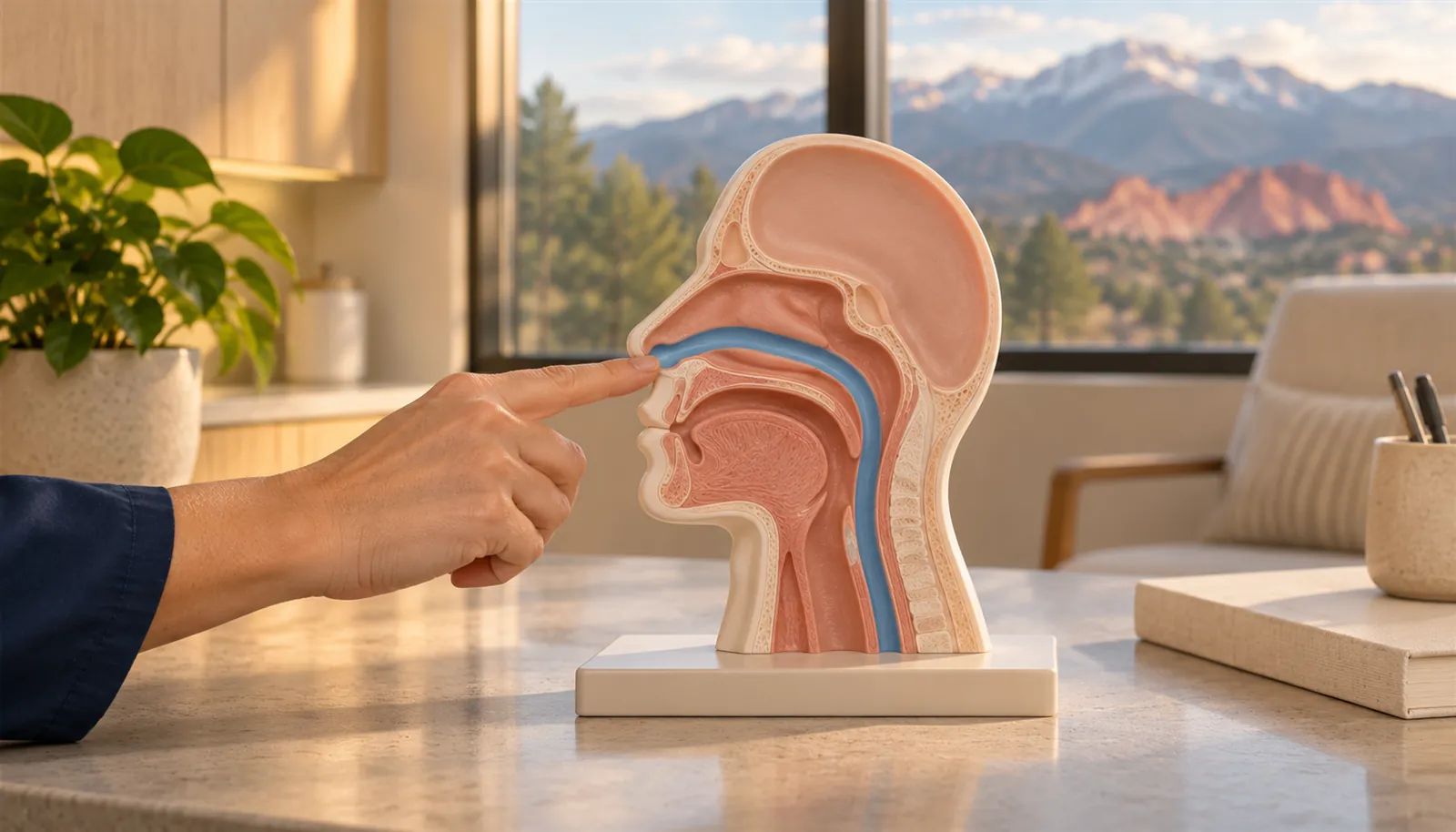
Airway dentistry is dental care that looks at how your mouth and face affect your breathing, especially during sleep. It is also called airway-focused dentistry. Much of it overlaps with dental sleep medicine, which is the dental care of snoring and obstructive sleep apnea.
Obstructive sleep apnea (OSA) means your airway narrows or closes again and again while you sleep, so breathing pauses or gets shallow. Snoring is the sound of air squeezing past soft tissue that has relaxed and narrowed.
Airway dentistry is a growing area, not a separate dental specialty. It pulls together ideas from sleep medicine, ear, nose and throat care, speech and feeding therapy, and dentistry. Some parts, like oral appliances for adult sleep apnea, have strong research behind them. Other parts are newer, and the research is still catching up. We'll tell you which is which.
You may also hear terms like airway-centered or breathing-focused dentistry. They describe the same basic idea: looking past the teeth to the whole system that helps you breathe, day and night.
What does an airway dentist look at?

An airway dentist looks at the parts of your mouth and face that shape the space you breathe through. That means the size and position of your jaws, how much room your tongue has, and where your tongue rests.
We also ask how you breathe. Do you breathe through your nose most of the day? Do your lips stay apart at rest? Do you snore, wake up tired, or grind your teeth at night? Grinding and jaw pain can sometimes show up alongside breathing problems during sleep.
We also look for small clues. These include worn teeth, a high and narrow palate, large tonsils, and tongue edges with a wavy, scalloped look. None of these alone means you have a problem. Together, they help us decide whether a sleep test or other checks make sense. We also note how you hold your head and neck, since some people tip their head forward to keep the airway open.
- Jaw size and position, and how the teeth fit
- Tongue room, tongue rest, and tongue ties
- Nasal breathing, snoring, and sleep quality
Who can airway dentistry help?

Airway dentistry may help adults who snore, who have been diagnosed with sleep apnea, or who can't get along with CPAP. For many adults with obstructive sleep apnea, a custom oral appliance made by a dentist is an option backed by sleep medicine guidelines. Learn more about sleep apnea treatment.
It can also help kids. Children who snore, breathe through their mouth, or sleep restlessly may have a narrow upper jaw, large tonsils, or a tight tongue. A dentist is often the first to notice these signs. Read more about mouth breathing and the face and sleep apnea in children.
People with a tongue tie, jaw pain, or daytime tiredness that has no clear cause may also benefit from an airway check. Every person is different, so results vary.
If you already use CPAP and it works well for you, you usually don't need to change anything. Airway dentistry is one more option, not a reason to stop care that works.
What happens at an airway exam?
An airway exam starts with talking. We ask about your sleep, snoring, energy, headaches, and health history. You may fill out a short sleep screening form. For kids, we ask parents about snoring, mouth breathing, bedwetting, and focus at school.
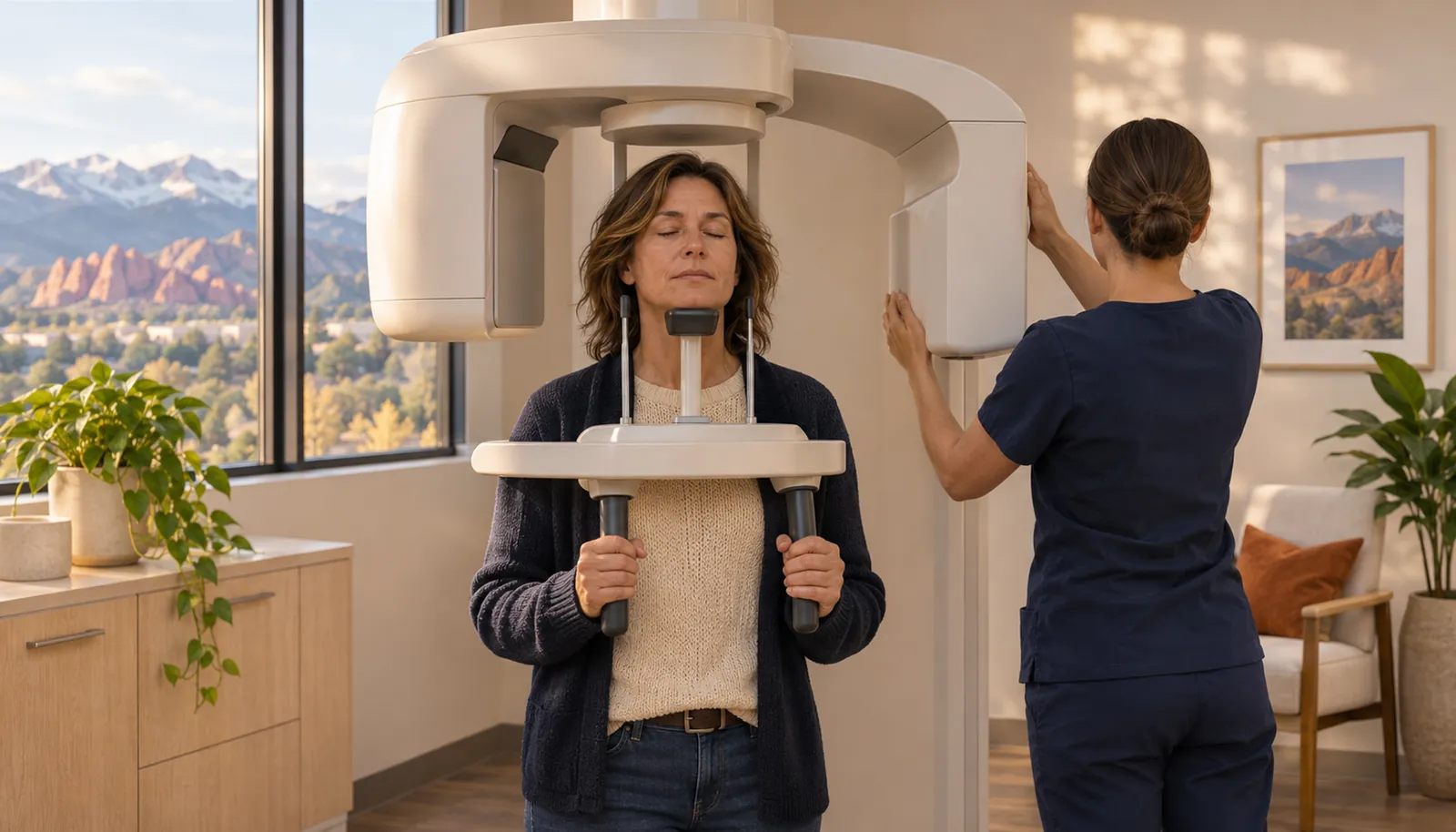
Next comes a hands-on exam of your teeth, jaws, tongue, tonsils, and how your lips and tongue move. Many airway exams also use a CBCT scan. CBCT stands for cone beam computed tomography. It is a 3D X-ray that shows your jaws, sinuses, and the shape of your airway.
If we see signs of a sleep breathing problem, the next step is usually a sleep test. Some adults can do a home sleep test.
We may also take photos and a digital scan of your teeth. These help us plan an appliance or track a child's growth over time. Nothing is done to your teeth at an airway exam. It is a visit for listening, looking, and explaining, and we walk you through each step before we start.
How airway dentists work with physicians

Good airway care is a team effort. Dentists can screen for sleep breathing problems and treat some of them. But diagnosing sleep apnea is a medical job. The American Dental Association asks dentists to screen patients and refer them to physicians for diagnosis. The American Academy of Pediatric Dentistry says the same for children.
In practice, that means we share findings with your sleep doctor, primary care doctor, or pediatrician. We may also work with ear, nose and throat doctors, speech therapists, lactation consultants, and myofunctional therapists.
Some claims about airway dentistry go further than the research. For example, the evidence on jaw expansion for kids' sleep apnea comes mostly from small studies. We'll explain what's known, what isn't, and why we suggest a plan.
This team approach also keeps you safe. A dentist can't rule out heart or lung problems that may cause similar symptoms, and a physician may not notice a narrow jaw or a tight tongue.
What treatments might be part of care?
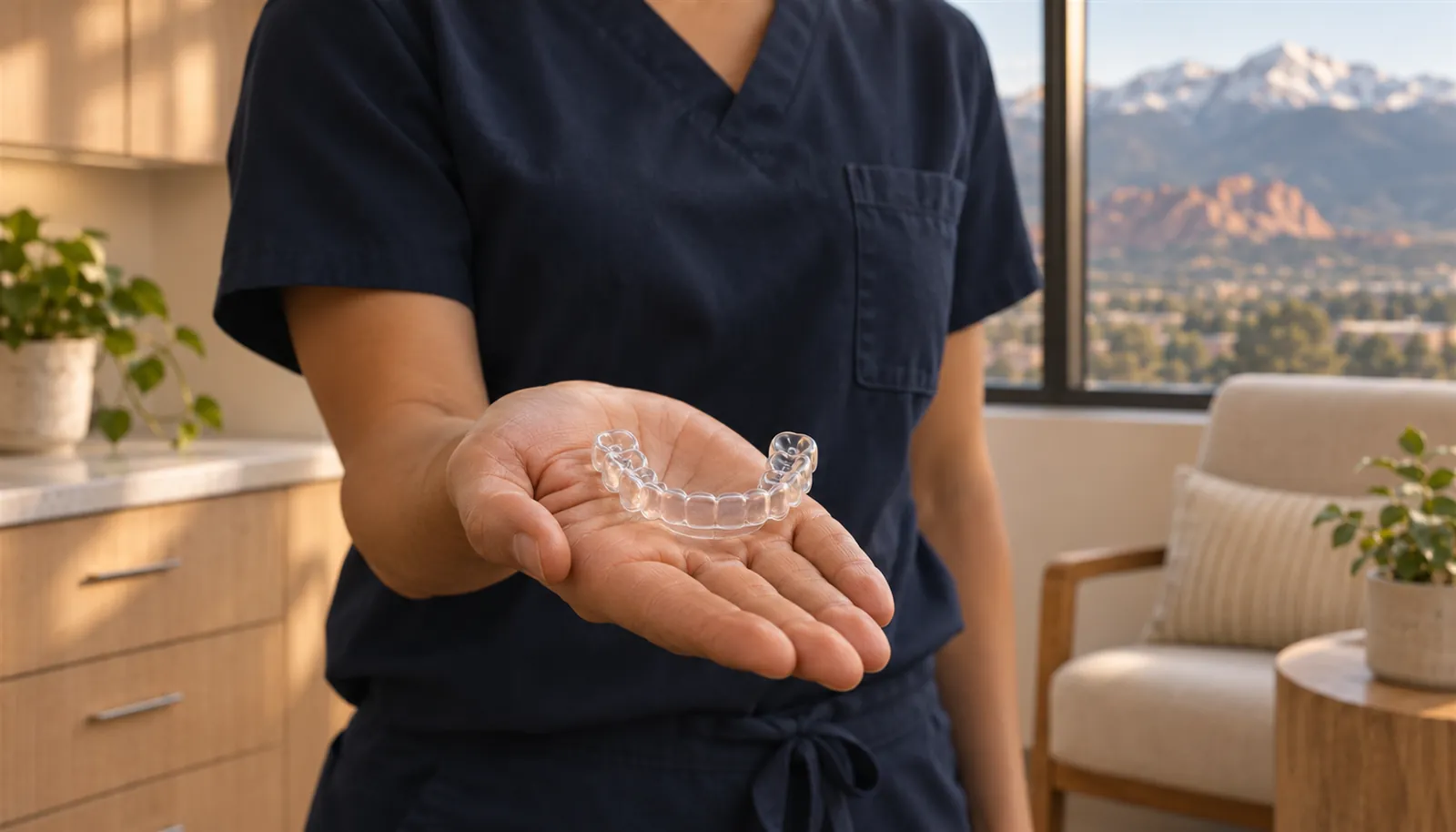
Treatment depends on what we find and on your age. For adults with sleep apnea, a custom oral appliance can hold the lower jaw slightly forward to help keep the airway open. For growing kids with a narrow upper jaw, upper and lower jaw expansion may create more room in the upper jaw.
When a tight tongue limits how the tongue moves, a tongue tie release may be an option. Myofunctional therapy uses simple exercises to train the tongue and lips to rest well and support nasal breathing.
Not everyone needs treatment from us. Sometimes the right next step is an allergy visit or an ear, nose and throat exam. We will say so.
Many plans combine steps. A child might wear an expander, practice tongue exercises, and see an allergist for a stuffy nose. An adult might wear an oral appliance and work on nasal breathing during the day. We check progress at follow-ups, and a repeat sleep test shows how well an appliance is working.
Is an airway exam right for you?

An airway exam may be worth it if you snore most nights, wake up tired, can't use CPAP, or if your child snores or breathes through their mouth. If anyone has seen you stop breathing or gasp in your sleep, get a sleep test. For kids, talk with your child's doctor, too.
Before your visit, it helps to jot down a few notes. How many nights a week do you snore? Do you wake up with headaches or a dry mouth? Does your child sleep with their mouth open, toss and turn, or wake up cranky? Your answers help us focus on what matters most to you.
Our office is in Colorado Springs. Bring any sleep tests, CPAP records, or past X-rays to your consult. Coming from farther away? We help out-of-town patients plan their visits. You don't need a referral to ask questions, and we're happy to send our notes to your doctor afterward.

Qualified Dentist, American Academy of Dental Sleep Medicine. Top Vivos VIP Provider and The Breathe Institute Ambassador.
Sources
- American Dental Association. Policy statement on the role of dentistry in the treatment of sleep-related breathing disorders, 2019.
- American Academy of Pediatric Dentistry. Policy on obstructive sleep apnea.
- American Academy of Dental Sleep Medicine. Oral appliance therapy.
- Zhao Z, et al. Effects of mouth breathing on facial skeletal development in children: a systematic review and meta-analysis. BMC Oral Health, 2021.
This article is general information, not medical advice. Every person is different. Talk with your doctor or book a consult about your own care.