The short answer
- A sleep apnea mouth guard holds your lower jaw slightly forward so your airway stays more open while you sleep.
- Sleep guidelines favor a custom, adjustable mouthpiece made by a qualified dentist over store-bought ones.
- Snoring can be a sign of sleep apnea, so get a sleep test before you rely on an anti-snoring guard.
If you snore, or you've been told you have sleep apnea, you've probably seen ads for a sleep apnea mouth guard that promises quiet nights. Some cost less than a dinner out. Others are made by a dentist. It's fair to wonder what the real difference is.
A sleep apnea mouth guard, also called a sleep apnea mouthpiece or oral appliance, is a device you wear while you sleep. It's very different from a sports guard or a night guard for grinding. This guide explains how these devices work, how custom and over-the-counter ones compare, and when an anti-snoring mouth guard is or isn't enough.
What is a sleep apnea mouth guard?
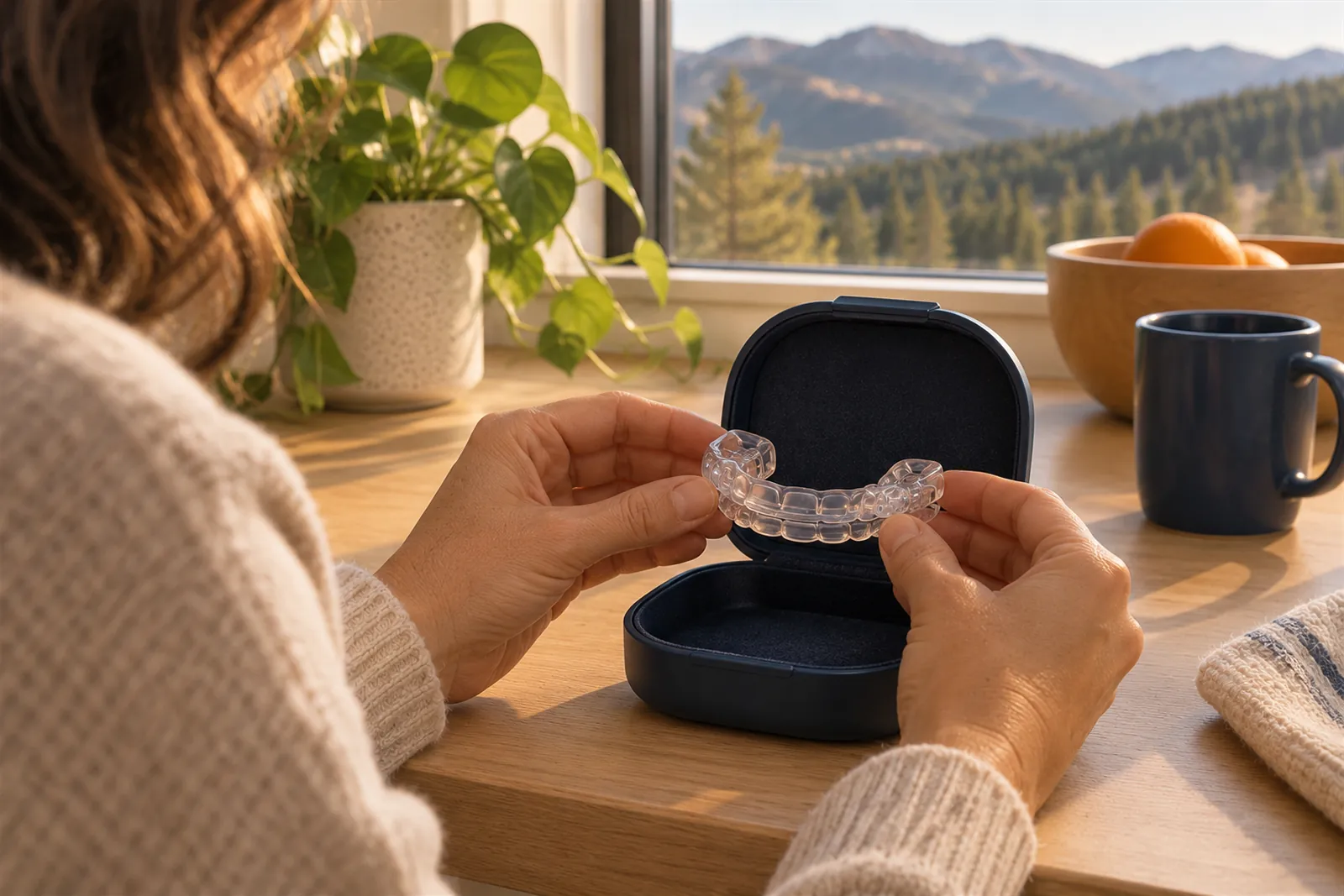
A sleep apnea mouth guard is a thin device that fits over your teeth and helps keep your airway open while you sleep. Dentists call it an oral appliance. It's used for snoring and for obstructive sleep apnea.
Obstructive sleep apnea (OSA) means the soft tissues in your throat relax and block your airway again and again during sleep. Each time, your breathing pauses or gets shallow, and your brain wakes you just enough to start again. You may not remember it, but you feel it the next day. Over time, untreated sleep apnea is linked to high blood pressure, heart problems, and drowsy driving.
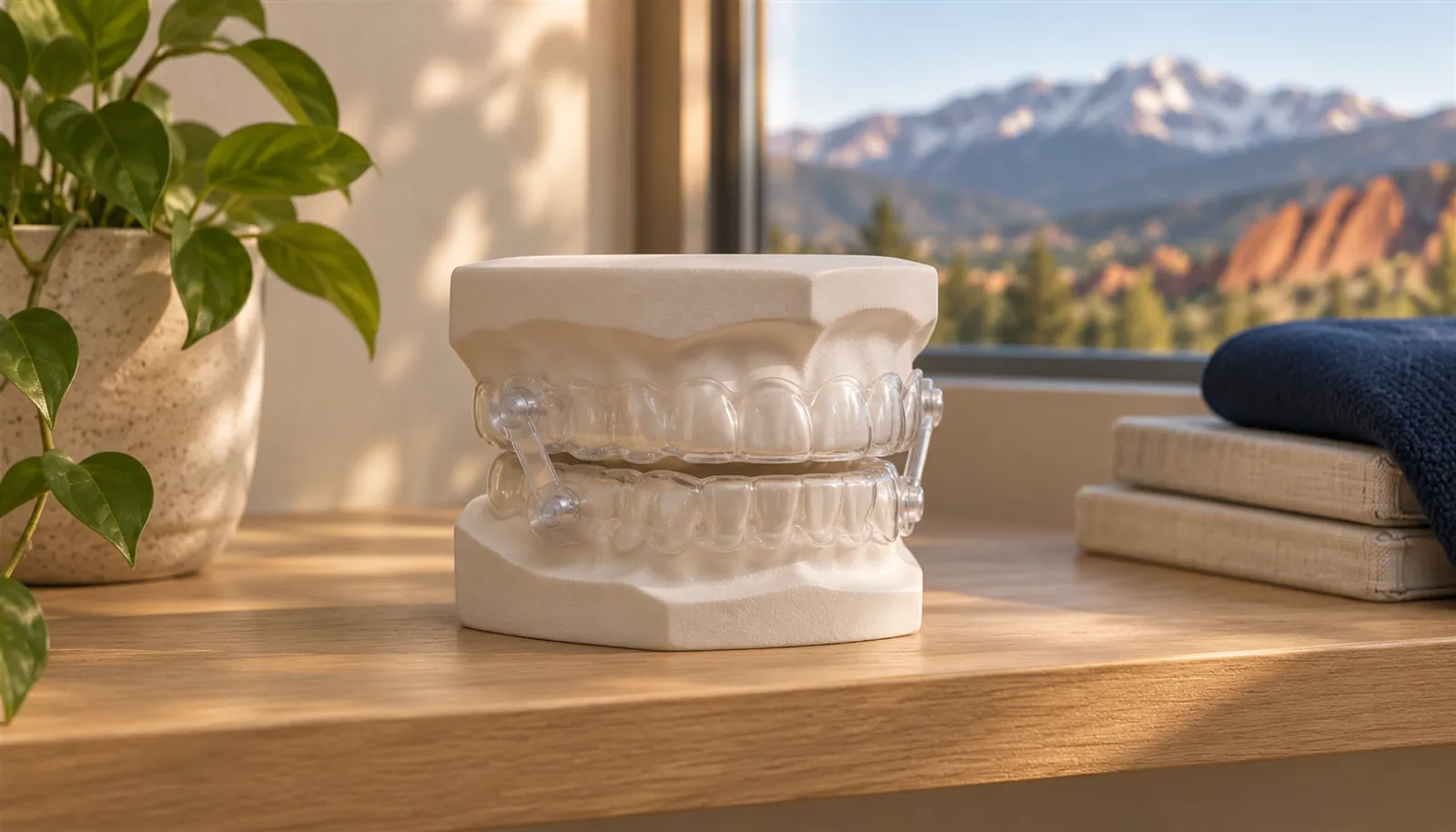
Most sleep apnea mouthpieces are mandibular advancement devices. That's a long name for a simple idea: the device moves your lower jaw (the mandible) a little forward. A less common type, called a tongue-retaining device, uses gentle suction to hold the tongue forward instead.
- Mandibular advancement devices: the most common type
- Tongue-retaining devices: hold the tongue forward
- Both are worn only while you sleep
How does a sleep apnea mouthpiece work?
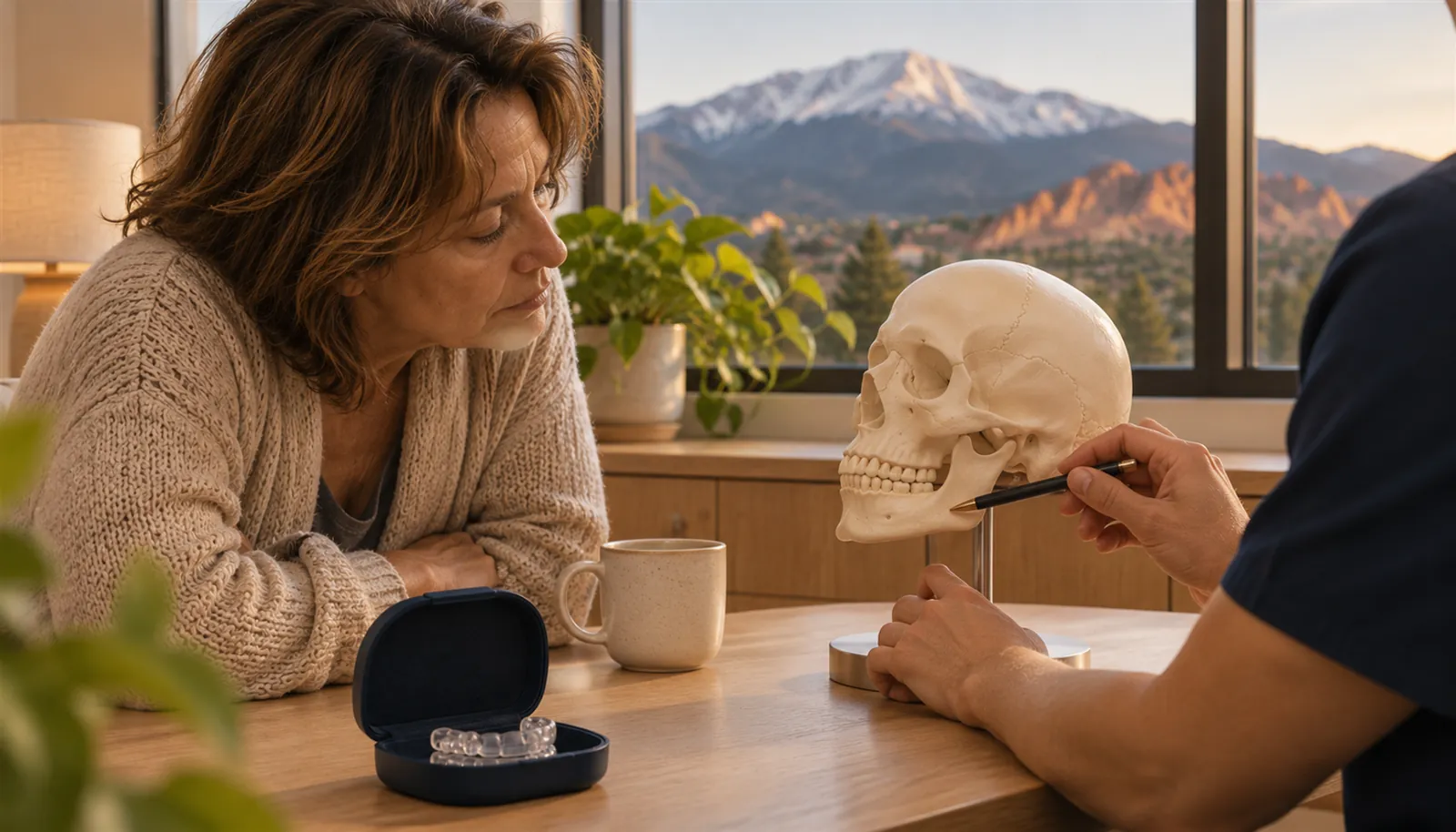
A sleep apnea mouthpiece works by holding your lower jaw slightly forward. Your tongue is attached to your lower jaw, so when the jaw moves forward, the tongue comes with it. That opens more space at the back of your throat.
More space means air can move past the soft tissues with less vibration and less blocking. Less vibration can mean quieter snoring. Less blocking can mean fewer breathing pauses.
The amount of forward movement matters. Too little may not help. Too much can make your jaw sore. That's why a good device can be adjusted in small steps. A dentist moves it a tiny bit at a time until it does its job and still feels comfortable. Then a follow-up sleep test shows how well it's working. Most custom devices come in two pieces, one for the top teeth and one for the bottom, joined so the jaw can still move a little.
Do over-the-counter mouth guards work?
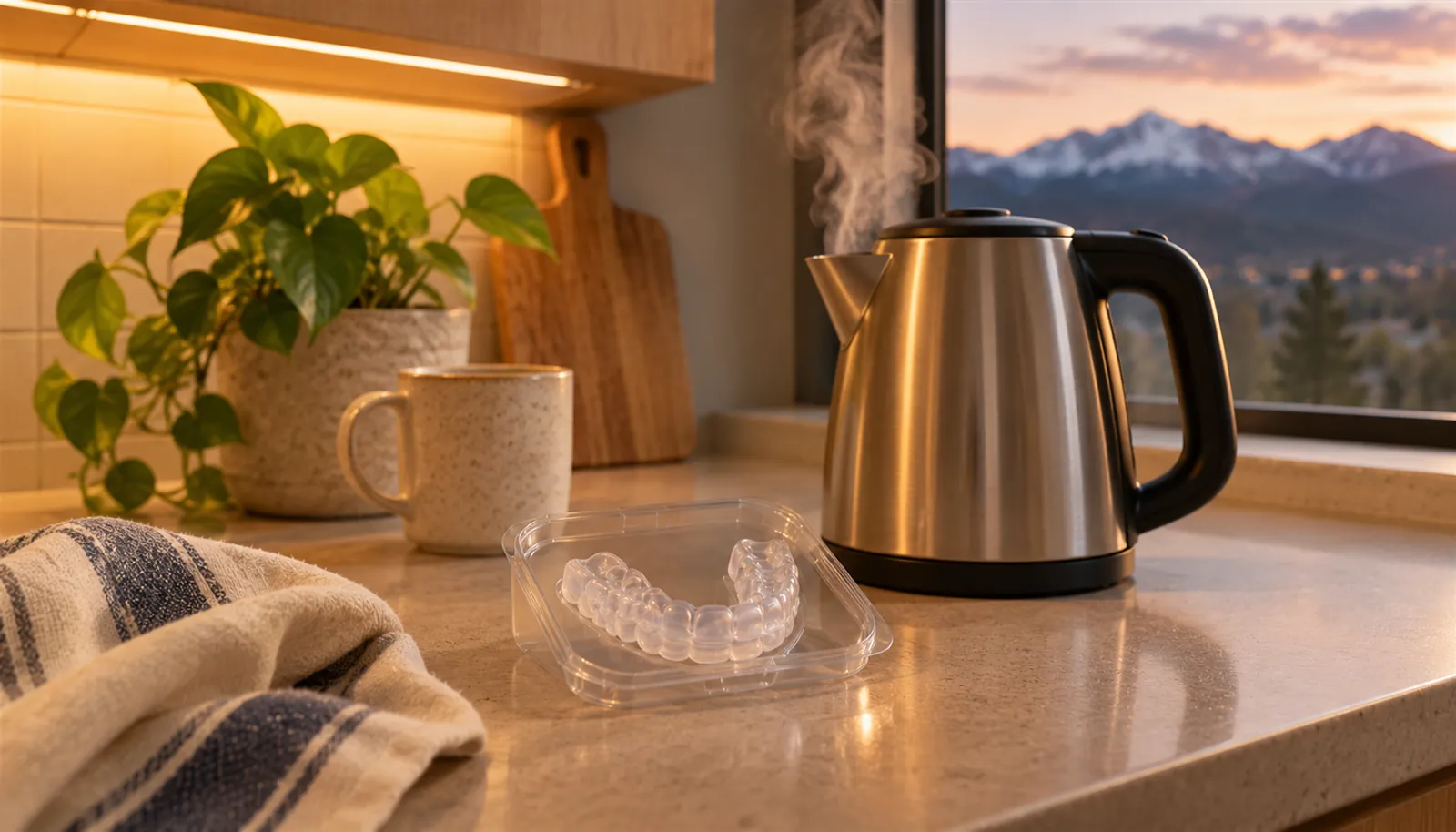
Over-the-counter mouth guards can help some people snore less, but they are not a reliable treatment for sleep apnea. Most are boil-and-bite. You soften the plastic in hot water, then bite into it to shape it. They're cheap and easy to find.
The trouble is fit. A boil-and-bite guard is bulky, and it can slip out during the night. Many don't let you fine-tune how far your jaw moves. In one study of people with mild sleep apnea, a custom device lowered breathing pauses, while a store-bought thermoplastic one did not. Most people in that study also preferred the custom device.
A poor fit can also push on your teeth or strain your jaw. If you've tried one and woke up with jaw pain, that's a sign to stop and get checked. Store-bought guards also skip the step that matters most: a check to see whether you have sleep apnea at all.
Is an anti-snoring mouth guard enough?
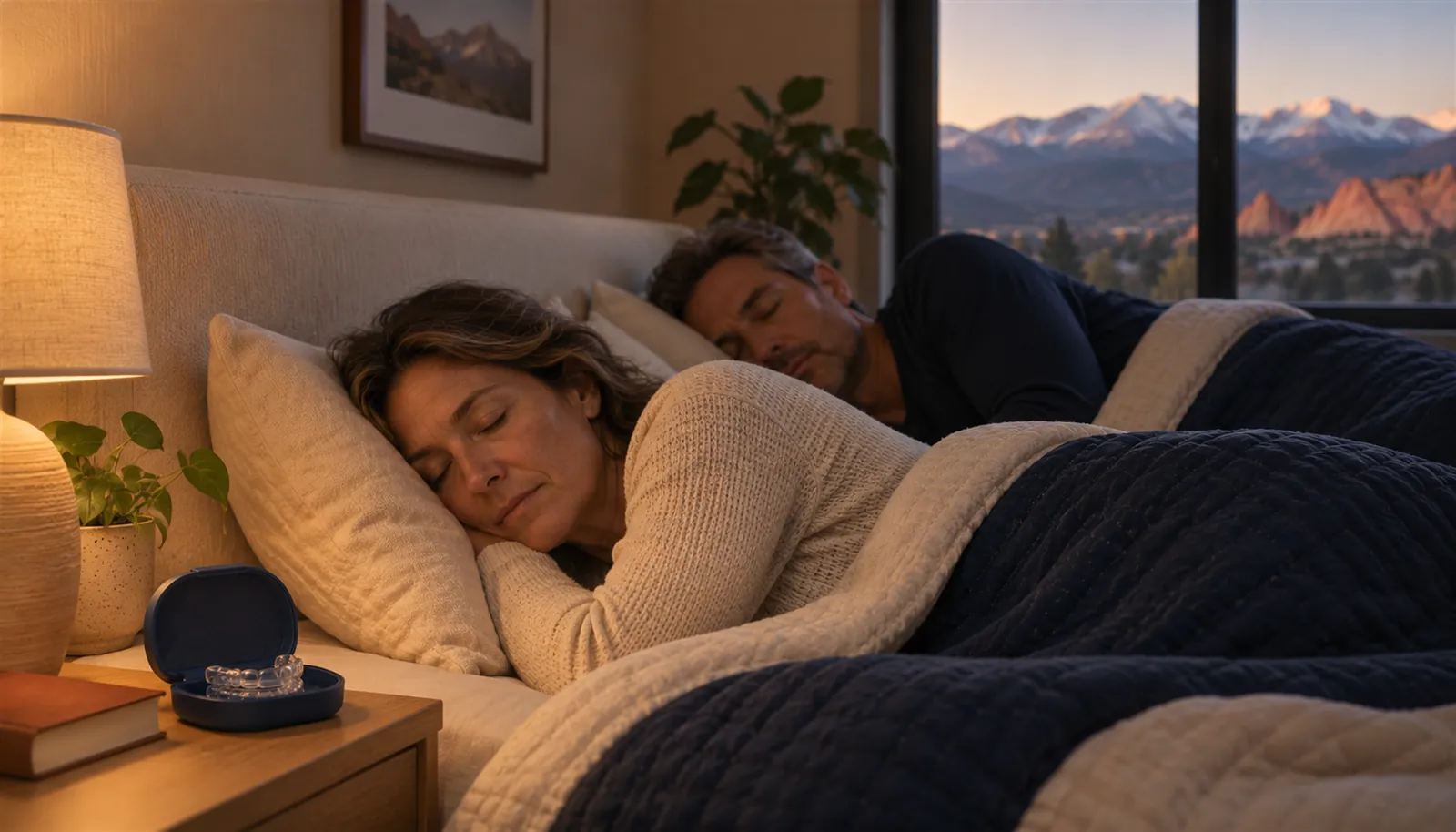
An anti-snoring mouth guard may be enough if you snore but don't have sleep apnea. If you do have sleep apnea, you need a device made and checked for that job. The only way to know which one you have is a sleep test.
Snoring happens when air makes the tissues at the back of your throat vibrate. It's very common. Snoring can be a symptom of sleep apnea, but not everyone who snores has it. Signs that point toward sleep apnea include gasping or choking at night, pauses your partner notices, and feeling tired even after a full night in bed.
Sleep guidelines support oral appliances for adults who want treatment for plain snoring. For a snoring mouth guard that works well and protects your teeth, the same custom approach applies. You can also read our guide on how to stop snoring or see our snoring treatment options.
Custom vs over-the-counter: key differences
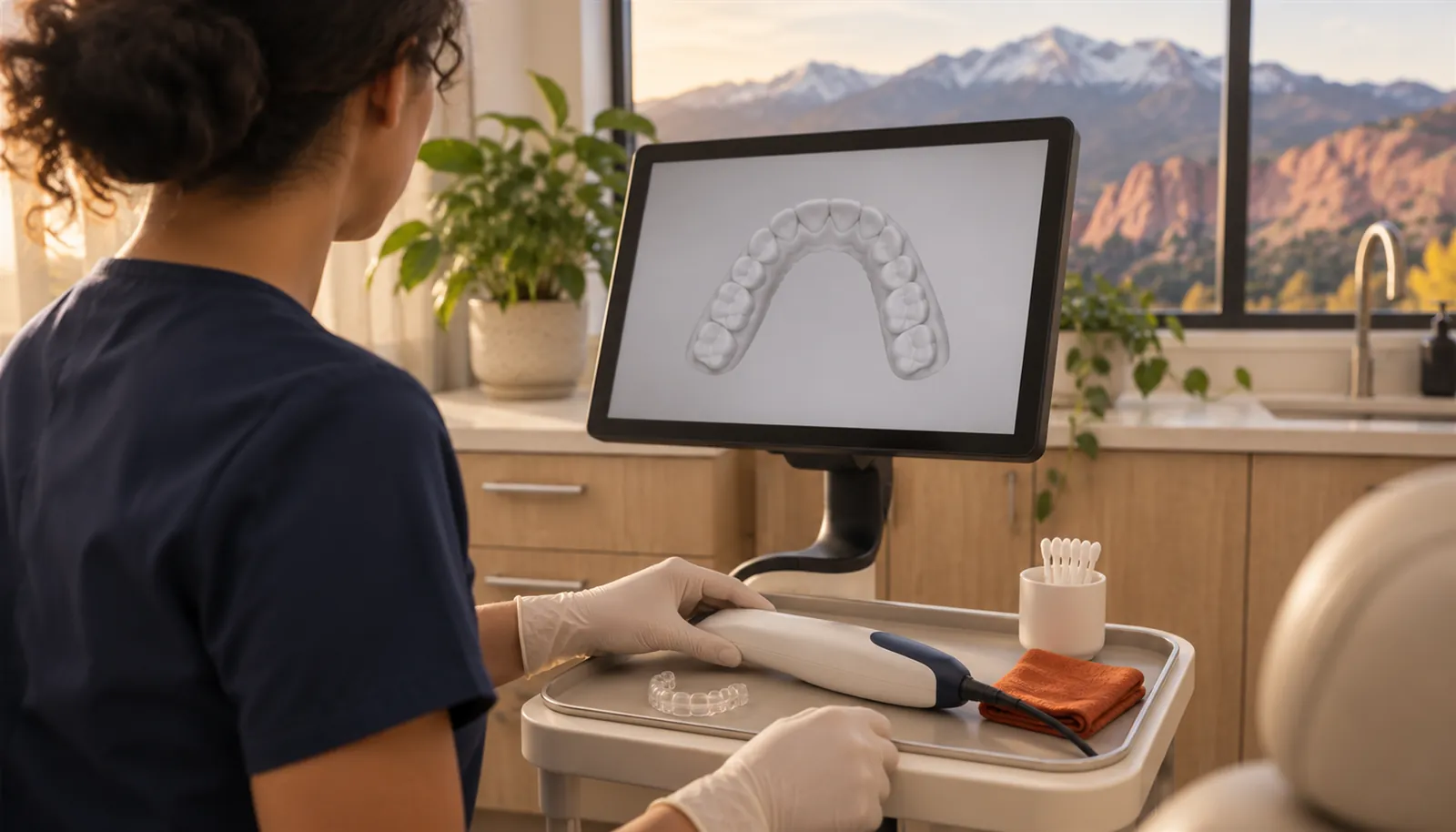
A custom mouthpiece is made from scans or impressions of your teeth, fits closely, and can be adjusted. An over-the-counter guard is shaped at home and usually can't be fine-tuned. That's the core difference.
The American Academy of Sleep Medicine and the American Academy of Dental Sleep Medicine suggest that a qualified dentist use a custom, adjustable appliance rather than a non-custom device. Custom devices are also thinner, so many people find them easier to wear. They tend to stay in place better, too. And because a dentist checks your teeth and gums first, problems are less likely to sneak up on you.
Store-bought guards cost less up front, and that's a real draw. But a cheap guard that you can't wear, or that doesn't treat the problem, isn't a bargain. A custom device costs more, and the cost depends on your plan and needs. We explain costs at your consult.
- Custom: made from scans, thin, adjustable
- Over-the-counter: shaped at home, bulkier
- Custom: checked with a follow-up sleep test
Who is a good fit?

Oral appliances tend to work best for adults with mild to moderate obstructive sleep apnea, and for people who can't tolerate CPAP. CPAP is a machine that blows air through a mask to keep your airway open. If you've struggled with it, read our guide on why CPAP can be hard to tolerate.
You also need enough healthy teeth to hold the device, and gums that are in good shape. People with severe sleep apnea can still use one in some cases, but only with their sleep doctor's guidance and close follow-up.
An oral appliance isn't the right choice for central sleep apnea. That's a different problem, where the brain doesn't send the signal to breathe. It isn't a blocked airway, so moving the jaw won't fix it. Your sleep test report shows which type you have. If you're not sure, bring the report to your consult and we'll go over it together.
What are the side effects?
The most common side effects are mild and short-lived: extra saliva, a dry mouth, sore teeth, or a tired jaw in the morning. These often ease as you get used to the device.
Over a longer time, some people notice their bite feels slightly different. A few may have jaw joint discomfort. That's why regular checkups matter. Your dentist watches your bite, your teeth, and your jaw joints, and makes changes if needed. If you already have jaw pain, ask about TMJ treatment before you start.
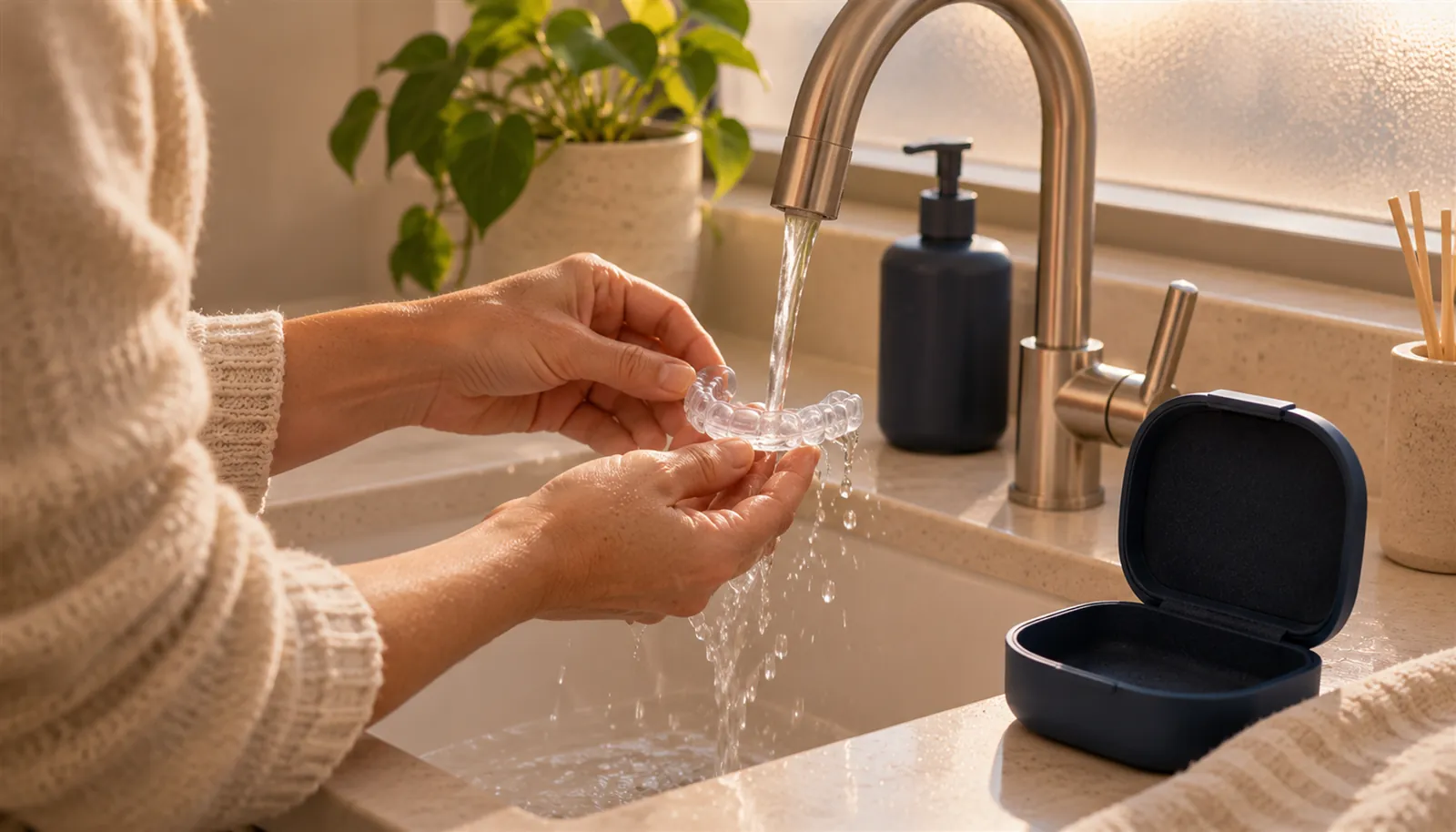
Care is simple. Rinse and brush the device each morning, let it dry, and keep it in its case away from pets. Bring it to your dental visits so it can be checked. Avoid hot water, which can warp the material. If it ever cracks or feels loose, call us instead of trying to fix it at home.
Getting a custom mouthpiece

Getting a custom sleep apnea mouthpiece starts with a diagnosis. If you don't have a sleep test yet, we can help you get one. Then we check your teeth, jaw, bite, and airway, and take digital scans to make your device.
Once it's ready, we fit it, teach you how to use it, and adjust it over a few visits. A follow-up sleep test shows how well it's working. We share results with your sleep doctor so everyone stays on the same page. Dr. Erlander is a Diplomate of the American Board of Dental Sleep Medicine, and Dr. Williams is a Qualified Dentist with the American Academy of Dental Sleep Medicine. Every person is different, so results vary.
You can learn more about sleep apnea treatment and CPAP alternatives at our Colorado Springs office. Coming from farther away? We help out-of-town patients plan their visits, too.

Diplomate, American Board of Dental Sleep Medicine since 2018. Member, American Academy of Craniofacial Pain.
Sources
- Ramar K, et al. Clinical practice guideline for the treatment of obstructive sleep apnea and snoring with oral appliance therapy: an update for 2015. J Dent Sleep Med, 2015.
- Cleveland Clinic. Oral appliance therapy for sleep apnea.
- Vanderveken OM, et al. Comparison of a custom-made and a thermoplastic oral appliance for the treatment of mild sleep apnea. Am J Respir Crit Care Med, 2008.
- Mayo Clinic. Snoring: diagnosis and treatment.
- American Academy of Sleep Medicine. Snoring.
This article is general information, not medical advice. Every person is different. Talk with your doctor or book a consult about your own care.